Showing posts with label Statism. Show all posts
Showing posts with label Statism. Show all posts
Sunday, July 21, 2019

Thursday, June 27, 2019
Monday, April 22, 2019
Tuesday, January 1, 2019
Thursday, May 17, 2018
Tuesday, May 1, 2018
Sunday, June 4, 2017
Wednesday, April 26, 2017
Tuesday, April 25, 2017
Orjafirmat
http://oikeusjakohtuus.blogspot.fi/2017/04/orjafirmat.html
Orjafirmat
Kansainvälisten ihmisoikeusjärjestöjen määritelmän mukaan orjuus on mm. työtä josta ei voi kieltäytyä tai työtä josta ei saa riittävää toimeentuloa. Suomessa nykyajan orjuus on nykyisen ja aikaisempien hallitusten toimesta laillistettu palkattoman työharjoittelun muotoon.
Kenen mielestä on olemassa työtä josta ei tarvitse maksaa palkkaa?
Palkattomaan työhön ei ole olemassa mitään perustetta. Palkan suuruuden kuuluu toki vaihdella osaamisen, kokemuksen ja työtehtävien mukaan, mutta palkaton työ jonka arvo työnantajalle on enemmän kuin 0 eur / kk, on kaiken mittapuun mukaan perustuslaissa ja kansainvälisessä oikeudessa kiellettyä orjuutta.
Tutustukaa ”Orjafirmat” Facebook sivustoon jossa kerätään tietoja Suomessa orjuutta kannattavista ja orjuuteen myötämielisesti suhtautuvista yrityksistä.
Alla muutama esimerkkejä Orjafirmat-sivuston listaamista yrityksistä:
Barona
Berner Oy
Fazer Finnair Oy
Handelsbanken
HC Services Oy
Heinolan kaupunki
Helsinki -filmi Oy
Hesburger
Hoivapalvelu Helmi
Hämeenlinnan kaupunki
IKEA
Intersport Finland Oy
ISS
Kalustetalo Masku
Kesko
K&K Laki Oy
Levi Levin Matkailu Oy
Megaeläin Oy
Naisasialiitto Unioni
Nestlé
Oulun kaupunki
Pro Artisaani ry
Raahen kaupunki
Restel
Seure Henkilöstöpalvelut
StaffPoint
Tokmanni
Varamiespalvelu
WorkPower Oy
World Vision Suomi
(listan lähde: https://www.facebook.com/Orjafirmat/)
oikeusjakohtuus.blogspot.com
Kenen mielestä on olemassa työtä josta ei tarvitse maksaa palkkaa?
Palkattomaan työhön ei ole olemassa mitään perustetta. Palkan suuruuden kuuluu toki vaihdella osaamisen, kokemuksen ja työtehtävien mukaan, mutta palkaton työ jonka arvo työnantajalle on enemmän kuin 0 eur / kk, on kaiken mittapuun mukaan perustuslaissa ja kansainvälisessä oikeudessa kiellettyä orjuutta.
Tutustukaa ”Orjafirmat” Facebook sivustoon jossa kerätään tietoja Suomessa orjuutta kannattavista ja orjuuteen myötämielisesti suhtautuvista yrityksistä.
Alla muutama esimerkkejä Orjafirmat-sivuston listaamista yrityksistä:
Barona
Berner Oy
Fazer Finnair Oy
Handelsbanken
HC Services Oy
Heinolan kaupunki
Helsinki -filmi Oy
Hesburger
Hoivapalvelu Helmi
Hämeenlinnan kaupunki
IKEA
Intersport Finland Oy
ISS
Kalustetalo Masku
Kesko
K&K Laki Oy
Levi Levin Matkailu Oy
Megaeläin Oy
Naisasialiitto Unioni
Nestlé
Oulun kaupunki
Pro Artisaani ry
Raahen kaupunki
Restel
Seure Henkilöstöpalvelut
StaffPoint
Tokmanni
Varamiespalvelu
WorkPower Oy
World Vision Suomi
(listan lähde: https://www.facebook.com/Orjafirmat/)
oikeusjakohtuus.blogspot.com
Thursday, April 20, 2017
Tuesday, April 18, 2017
Monday, March 27, 2017
Monday, March 20, 2017
ClandesTime 100 – Sex, Violence and Censorship
http://www.spyculture.com/clandestime-100-sex-violence-censorship/
Why do we censor films? Intuitively we all know the answer to this question – because there are some things we don’t want to see on the screen. In this episode we examine film censorship, focusing primarily on the treatment of cinematic violence by the MPAA and BBFC. Using Walter Benjamin’s Critique of Violence as a foundation I discuss how societies are attempts to rationalise violence and determine what are legitimate and illegitimate uses of force. We then look at how censorship does not do much to limit the scale or type of violence shown on screen, but instead prevents the depiction of the consequences of violence, the suffering and pain, before talking about how this kind of censorship influences our views of real-world violence, especially that committed by the state.
Why do we censor films? Intuitively we all know the answer to this question – because there are some things we don’t want to see on the screen. In this episode we examine film censorship, focusing primarily on the treatment of cinematic violence by the MPAA and BBFC. Using Walter Benjamin’s Critique of Violence as a foundation I discuss how societies are attempts to rationalise violence and determine what are legitimate and illegitimate uses of force. We then look at how censorship does not do much to limit the scale or type of violence shown on screen, but instead prevents the depiction of the consequences of violence, the suffering and pain, before talking about how this kind of censorship influences our views of real-world violence, especially that committed by the state.
Wednesday, March 15, 2017
OK GOOGLE: SEND 50 DOLLARS TO THE FREEDOM FEENS – FREEDOM FEENS RADIO
https://www.freedomfeens.com/?p=14100
James Weeks, Jim Jesus and MWD talk about Gratis versus libre, Richard Stallman’s Foot, Fair Use, and the problem with “intellectual property.”
James Weeks, Jim Jesus and MWD talk about Gratis versus libre, Richard Stallman’s Foot, Fair Use, and the problem with “intellectual property.”
Thursday, January 26, 2017
The Dangerous History Podcast Ep. 0031: Uncle Sam vs. Democracy Part 1: Operation Ajax / Ep. 0032: Uncle Sam vs Democracy, Part 2: Operation PB Success
Ep. 0031: Uncle Sam vs. Democracy Part 1: Operation Ajax

Podcast: Play in new window | Download
In this episode and the next, we’re going to look at two instances in the early Cold War of American-sponsored and -instigated overthrows of democratically elected governments, and their replacement by unpopular, USA-backed dictatorships. Of course, I’m talking about Iran and Guatemala in the early-1950s. This episode will set the context and cover Iran. Next time we’ll cover Guatemala and consequences of these sorts of operations.
Join Prof CJ as he discusses:
- A quick sketch of the Dulles Brothers (John Foster & Allen) who played such key roles in these sorts of operations in the 1950s
- A look at the historical context (ie, early Cold War)
- A sketch of Iranian PM Mohammed Mossadegh, and why the Dulles Bros (and the corporate interests they served) wanted him overthrown
- How the CIA overthrew Mossadegh and replaced him with Shah Reza Pahlavi
- The aftermath of this operation and its legacy, which is still being felt today
Ep. 0032: Uncle Sam vs Democracy, Part 2: Operation PB Success

Podcast: Play in new window | Download
Encouraged by their success against Iran’s democratic government (covered in last episode), the Dulles Brothers’ next move was against the small central American country of Guatemala, where a left-of-center government appeared to be threatening the interests of the United Fruit Company.
Join Prof CJ as he discusses:
- The immediate backstory on Guatemala, including the dominance of American corporations over the country, its democratic revolution in 1944 and the election of Jacobo Arbenz Guzman to the presidency in 1951
- The Arbenz government’s Decree 900, aimed at redistributing unused land to poor peasants
- The CIA’s Operation PB Success, a largely psychological campaign that succeeded in overthrowing Arbenz in June 1954
- How the CIA itself, after ousting Arbenz, failed to find any real evidence that Arbenz was in league with the Soviets
- The brutal aftermath of this coup, which caused suffering and oppression in Guatemala for decades and killed over 200,000 people
- A brief thought experiment of how Americans might respond if they were put in an analogous situation
- Some discussion of the concept known as “blowback”
Monday, January 23, 2017
The Dangerous History Podcast Ep. 0087: Grain and the State
http://profcj.org/grain-and-the-state/
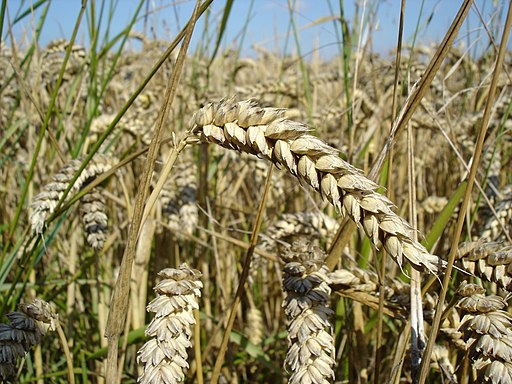
Ep. 0087: Grain and the State
Podcast: Play in new window | Download

Join CJ as he discusses:
- How people lived in the Paleolithic Era, which actually encompasses the vast majority of human existence
- The Neolithic Revolution and the coming of agriculture
- The domestication of grains and their rise to dominate global food production
- The rise of “civilization,” including its downsides
- The characteristics of grains which make them the preferred food crops of states
- Alternatives to sedentary, fixed-field, grain-dominated agriculture, which states tend to discourage
- A few thoughts and observations about grains and states in the modern world
External Links
- A lecture by James C. Scott entitled, “How Grains Domesticated Us”, which is the one from which I played an excerpt and to which I referred several times in the show
- Another great James C. Scott lecture, “The Art of Not Being Governed” which discusses a lot of similar and related topics (I also highly recommend Scott’s book The Art of Not Being Governed — see below)
- The Dangerous History Podcast is covered by a BipCot No Gov license; learn more at BipCot.org
Prof CJ’s Picks (buy anything from Amazon via these affiliate links to help support the show at no additional cost to you)
Wheat photo attribution: By User:Bluemoose (Own work) [GFDL (http://www.gnu.org/copyleft/fdl.html), CC-BY-SA-3.0 (http://creativecommons.org/licenses/by-sa/3.0/) or CC BY-SA 2.5-2.0-1.0 (http://creativecommons.org/licenses/by-sa/2.5-2.0-1.0)], via Wikimedia Commons
Sunday, November 20, 2016
Saturday, September 3, 2016
Friday, September 2, 2016
Subscribe to:
Posts (Atom)